Saturday, December 27, 2025

Wednesday, December 17, 2025
Wednesday, December 10, 2025
Saturday, December 6, 2025
Sunday, November 30, 2025
What’s the real difference between honed, polished, leathered and brushed finishes?
Yesterday I shared how natural stone like marble, travertine and granite actually form in nature.
Today, I wanted to continue with something designers ask me the most:
What’s the real difference between honed, polished, leathered and brushed finishes?
Here’s a quick breakdown from a stone craftsman’s perspective:
✨ Polished
• Glossy, mirror-like surface
• Highlights the veining dramatically
• Best for: luxury bathrooms, vanities, hotels
✨ Honed
• Matte, soft finish
• More modern and minimal
• Less slippery than polished
• Best for: contemporary bathrooms, floors
✨ Leathered
• Textured, tactile surface
• Hides fingerprints incredibly well
• Gives stone a warm, natural depth
• Best for: countertops, feature walls
✨ Brushed
• Softly textured with subtle movement
• Very natural look
• Works beautifully on travertine
• Best for: rustic or Mediterranean style spaces
Why this matters for interior design:
Choosing the right finish can completely change how a bathroom or countertop feels — not just visually but emotionally.
Same stone, four finishes → four different moods.
If anyone wants, I can also share examples of how each finish reacts to light & shadow.
— Maat (stone craftsman)
“A quick guide on how natural stone and marble actually form — from a stone craftsman’s perspective”
Did you know that every piece of marble carries millions of years of history?
Not just a surface… but a geological story created by heat, pressure and time. 💎
Here’s a quick, fascinating breakdown for anyone who loves interior design, architecture or natural materials:
🪨
How Marble Forms
Marble starts as limestone.
Over millions of years, intense heat + pressure inside the earth transform it into marble.
That’s how Calacatta, Carrara and Viola marbles get their dramatic veins — they’re literally the result of tectonic movement.
🪨
How Travertine Forms
Travertine grows near hot springs.
Water flows, minerals build up, layer by layer…
That’s why it has natural holes and a soft, organic texture.
🪨
How Granite Forms
Granite forms deep underground when magma cools extremely slowly.
The slow cooling allows crystals to grow, making granite incredibly strong.
🪨
Why Colors & Veins Differ
Different minerals create different looks:
• iron → gold/brown tones
• graphite → grey/black
• copper → green
• clay → beige/cream
Every stone block is unique because nature is unique.
✨
Why Designers Love Natural Stone
Because no engineered material can replace:
✔ real geological depth
✔ natural movement
✔ unique veining
✔ timeless luxury
✔ emotional texture
When you place a real marble piece in your home, you’re literally placing a piece of the Earth’s history.
If you’d like, I can prepare a guide explaining the difference between:
• honed
• polished
• leathered
• brushed
stone finishes.
Just comment “Guide” below and I’ll send it! 🔽💬
Saturday, November 29, 2025
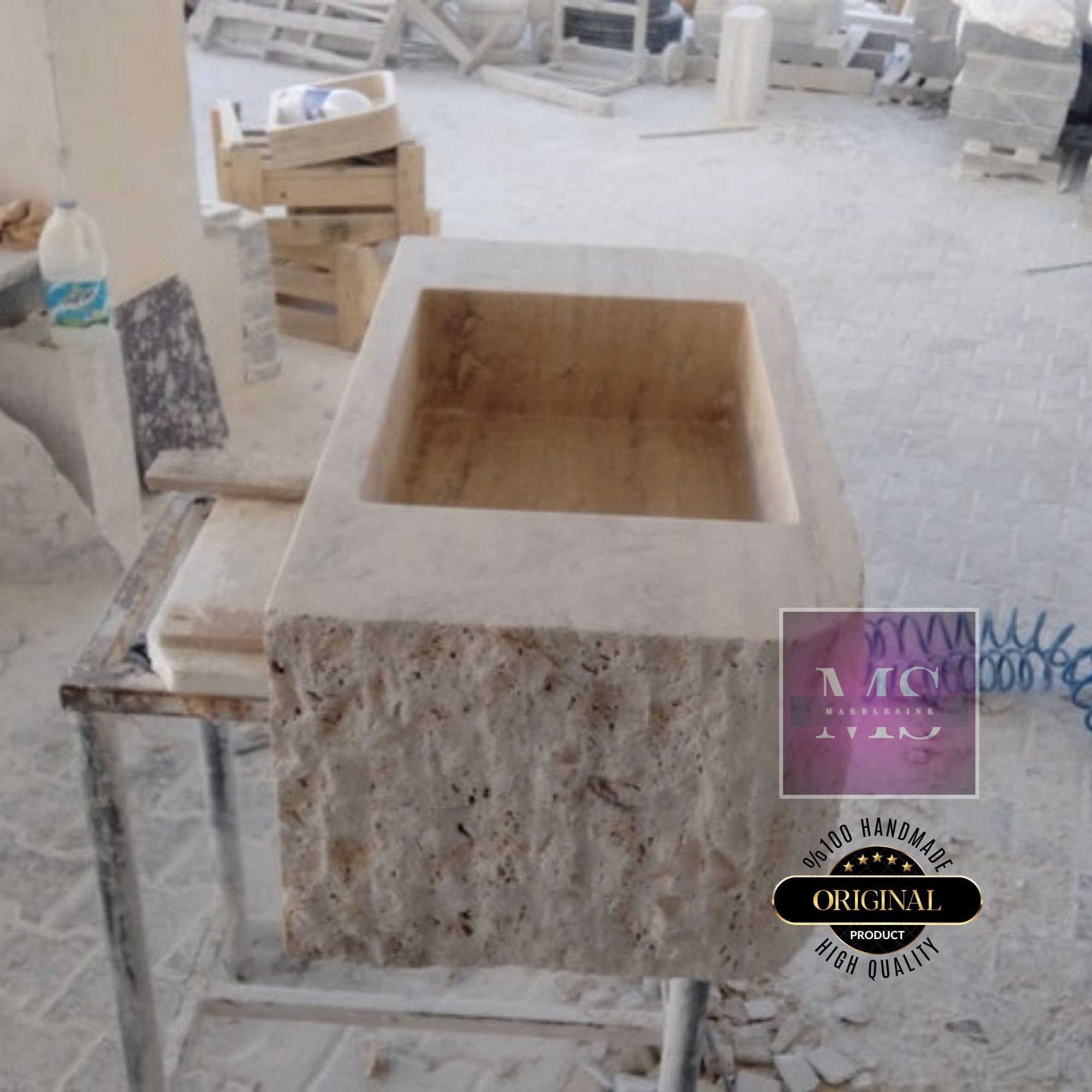
Filled vs Unfilled Travertine Sinks: What to Ask Before Ordering
A practical material-selection guide by MarbleSinkCo. A travertine sink can bring warm colour, visible pores and carved texture into a bath...
-
19" Natural Travertine Drop-In Bathroom Sink (Hand-Carved Real Stone) • 3 faucet holes (centerset) • Centered drain • No overflow hole ...
-
 https://marblesinkco.etsy.com/listing/4468759492/travertine-suspended-sink-floating-stone / #luxurybathroom #travertinesink #floatingvanity...

